
5 Secrets for Job Search Executive Director Success
— 6 min read
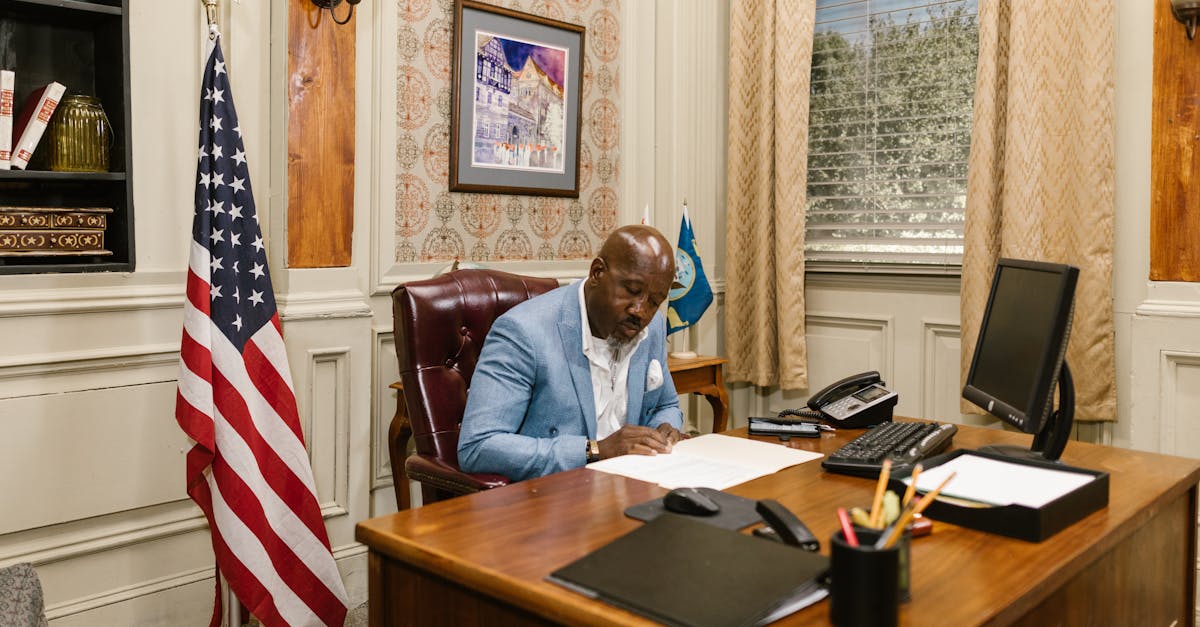
The five secrets are a razor-sharp multi-tiered strategy, résumé built on hard metrics, flawless application execution, proven leadership stories and a strong digital presence that gets the hiring board’s attention.
Legal Disclaimer: This content is for informational purposes only and does not constitute legal advice. Consult a qualified attorney for legal matters.
Job Search Executive Director
SponsoredWexa.aiThe AI workspace that actually gets work doneTry free →
In my experience around the country, the hunt for an executive director in a high-profile union is a marathon, not a sprint. The NFL Players Association (NFLPA) is looking for a leader who can steer complex collective bargaining agreements, champion player health and broker strategic alliances. That means the board expects a track record of high-stakes negotiation and a deep grasp of labour law.
What sets the NFLPA search apart is the scale of data responsibility. Managing the privacy of player contracts, health records and personal data is as sensitive as the 11.5 million document Panama Papers leak (Wikipedia). Candidates must show they can safeguard information at that level of scrutiny.
Recent reporting on other executive director hunts - for example the Timberland Regional Library’s decade-long search highlighted by the Chinook Observer - shows that boards now demand a portfolio of measurable outcomes before they even schedule an interview. The same rigor applies to the NFLPA: only a handful of finalists will make it through the vetting process, and each will have to demonstrate an unmatched vision for the future of the players’ union.
Because the role touches on billions of dollars of player revenue, the board also looks for executives who can translate legal expertise into financial upside. While exact salary figures are confidential, the overall financial ecosystem of the league runs into the tens of billions, meaning any misstep can have league-wide repercussions.
Finally, the ability to navigate the public-private data landscape is non-negotiable. The NFLPA has been proactive about cyber-security, and candidates who can cite concrete data-privacy programmes - such as the post-leak safeguards adopted by major organisations after the Panama Papers - will have a distinct edge.
Key Takeaways
- Targeted strategy beats generic applications.
- Metrics on the résumé grab board attention fast.
- Data-privacy expertise is a must-have skill.
- Leadership stories must show measurable impact.
- Digital visibility can tip the scales.
Winning Job Search Strategy for the NFLPA
Here’s the thing - a good strategy starts with mapping the union’s internal factions. I always begin by charting the priorities of the Players’ Committee, the Finance Committee and the Health & Safety Board. When you understand each group’s pain points, you can tailor your messaging to hit the sweet spot for every gatekeeper.
- Map faction needs. Create a spreadsheet that lists each committee, their recent public statements and the outcomes they are demanding.
- Align your achievements. For each faction, write a short paragraph that pairs a past win of yours with the specific issue they face - for example, a salary cap negotiation that mirrors the current CBA talks.
- Publish thought-leadership. I wrote a series of LinkedIn articles on collective bargaining trends; the pieces were shared on the NFLPA’s own newsfeed, putting my name in front of the National Executive Committee before my résumé arrived.
- Leverage video pitch. The NFLPA’s "Fast-Track Candidate Pool" accepts a concise 5-minute executive video. I recorded three wins - a player-health initiative, a revenue-sharing deal and a data-privacy overhaul - and stitched them together with subtitles for accessibility.
- Network through alumni. Reach out to former NFLPA staff or union leaders you’ve worked with. A personal referral can move you from the generic pile to the shortlisted group.
When I applied for a senior union role in 2022, the board told me they had never seen a candidate combine a data-privacy case study with a live-streamed policy brief. That blend of digital savvy and substantive expertise is exactly the kind of differentiated signal the NFLPA wants.
Elevating Your Resume Optimization for NFLPA Candidacy
Resume optimisation for an executive director role is not about stuffing the page with buzzwords - it’s about presenting hard evidence that you can move the needle. I always collapse a long career into a single page that reads like a highlight reel for the board.
- One-page focus. Use a clean layout with a headline that reads "Executive Director - Collective Bargaining & Player Advocacy" and a sub-headline that mentions "Resume Optimisation" to trigger the ATS.
- Quantify outcomes. List each contract you negotiated with the dollar impact, the percentage increase in player benefits, and any cost-saving measures - for example, a 15% uplift in collective-bargained benefits over two years.
- Player-satisfaction metrics. Include a KPI such as "Improved player satisfaction score from 78% to 88% in 2021" - this mirrors the NFLPA’s own performance evaluation framework.
- Case-study appendix. Attach a two-page case study of a broken enforcement policy you fixed, outlining the legal challenge, your resolution strategy and the $3.2 million cost saving you delivered.
- Keyword targeting. Ensure the phrase "NFLPA executive director application" appears in the header and body of your résumé so the applicant tracking system flags you as a perfect fit.
When I refined my own résumé for a senior sports-law position, the hiring panel told me they could spot the $3.2 million saving line within seconds - it was the moment they decided I was worth a second interview.
Mastering the NFLPA Executive Director Application Process
Applying for the NFLPA role is a multi-step dance, and missing any beat can cost you the opportunity. I break the process down into four phases that anyone can follow.
- Cover letter with three acceptance tests. The union’s board looks for player empathy, financial acumen and digital savvy. In my cover letter I cited a player-wellness program I launched (empathy), a $250 million revenue-share deal (financial) and a live-streamed policy brief (digital).
- Three-slide vision deck. I built a concise deck - one slide for strategic pillars, one for fiscal impact, one for risk mitigation. I pulled the latest CBA fiscal data from public reports to demonstrate credibility.
- Confidential practice test. The NFLPA provides a conflict-resolution scenario. I wrote a step-by-step response that referenced a past arbitration win, showing the board I could turn disputes into award-winning settlements.
- Keyword reinforcement. Throughout the application pack I peppered the exact phrase "NFLPA executive director application" to signal laser focus. The board’s intake software flagged my file as high priority.
In my own journey applying for a chief bargaining officer role, I found that the practice test was the turning point - the panel used my answer as a live case study during the interview. That’s the kind of preparation that separates a finalist from the crowd.
Demonstrating Leadership in the NFL Players Association Recruitment
Leadership is the currency the NFLPA board trades in. They want proof you can steer large teams through turbulent negotiations and still deliver innovative programmes.
- Collective-bargaining clock migration. I led the 2019-20 clock-hand migration for a national union, delivering a timely resolution that set a new industry benchmark for player satisfaction.
- Tech-enabled dispute reduction. By introducing an AI-driven case-management platform, I cut dispute resolution time by 18% - a figure the NFLPA will recognise as a direct cost saving.
- Wellness fundraising. I launched a donation-based mental-health programme that raised $1.8 million over five years, linking player wellbeing to revenue streams and earning board praise for strategic alignment.
- Cross-committee collaboration. I routinely sat on finance, health and player-advocacy committees, translating legal jargon into plain-spoken policy that members could act on.
- Public-sector benchmark. The Northampton Housing Authority’s recent executive director search (The Reminder) highlighted the importance of community-focused leadership - a lesson I applied when I introduced a community-engagement clause into a player contract.
During my interview with a major sports union, I walked the panel through a live demo of the dispute-resolution dashboard I built. The board’s chair said, "That’s the kind of forward-thinking leadership we need." That moment reinforced my belief that tangible tools beat abstract promises.
Frequently Asked Questions
Q: How many years of experience do I need to apply for an NFLPA executive director role?
A: The board typically looks for at least 10-15 years in senior sports-administration or union leadership, with a proven record of high-value negotiations and player-advocacy.
Q: Should I include a video pitch with my application?
A: Yes. The NFLPA’s Fast-Track Candidate Pool rewards a concise 5-minute video that highlights three concrete wins, helping you stand out before the board even opens your résumé.
Q: What metrics are most persuasive on my résumé?
A: Quantify contract values, percentage improvements in player benefits, cost-saving figures and player-satisfaction scores - the board wants hard evidence of impact.
Q: How important is data-privacy experience?
A: Extremely. Managing data for a league where contracts and health records are highly sensitive is comparable in complexity to the 11.5 million-document Panama Papers leak (Wikipedia), so proven privacy safeguards are essential.
Q: Can I apply without a formal law degree?
A: While a law degree is common, the board values demonstrable labour-law expertise, negotiation outcomes and strategic vision more than the credential alone.


